
Applications
Aluminum coil for Cladding
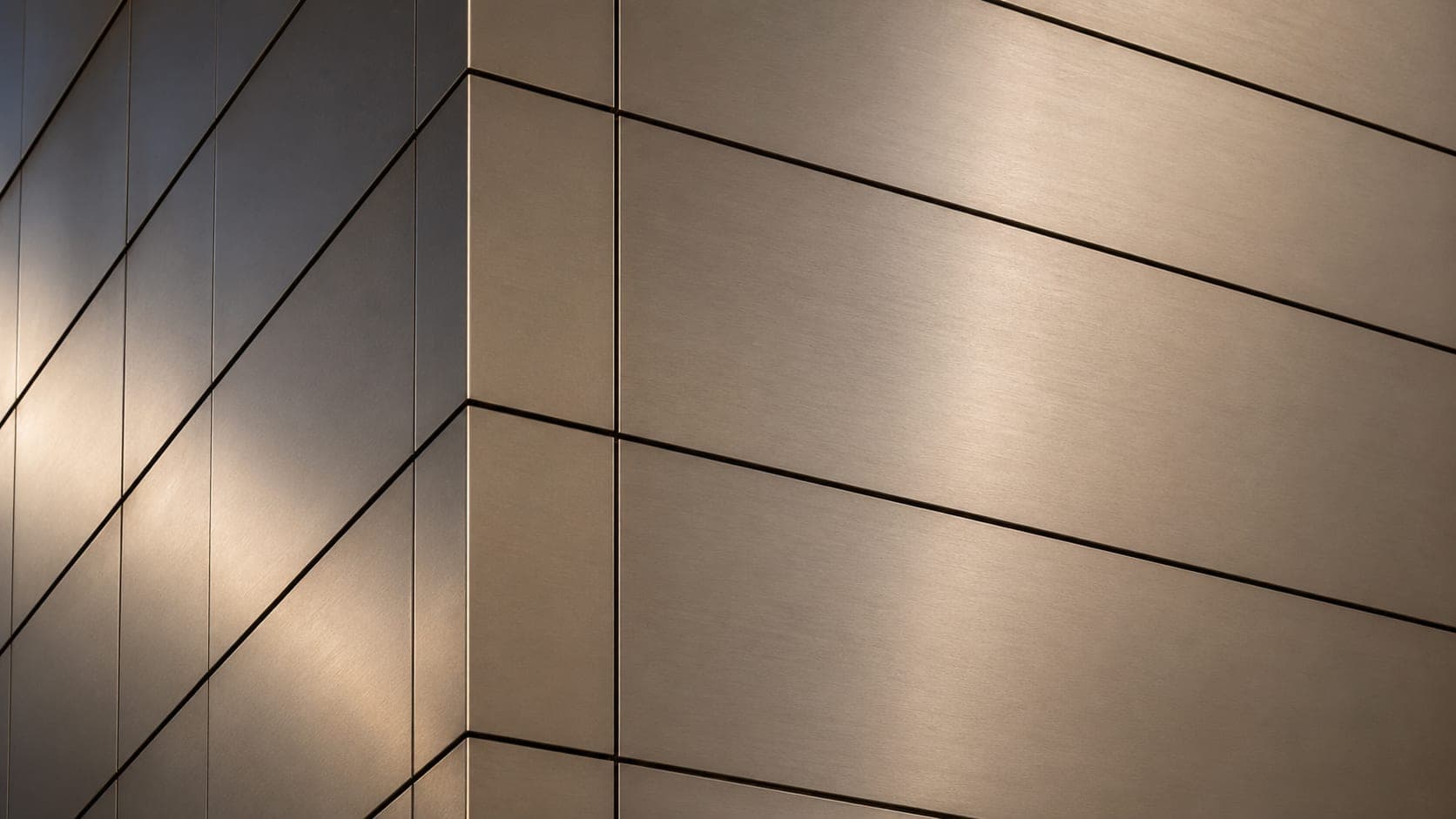
Cladding uses architectural facades. Same logic as roofing: exposure severity decides between the two.
Recommended starting specification
- Coil form
- Architectural facades
- Recommended coating
- PVDF, HDPE
Guidance, not a fixed datasheet: confirm per order.
Requirements
Cladding carries the same exposure-severity logic as roofing, since it's a permanent, un-recoated exterior surface for the life of the building, but it's viewed differently.
- Viewing distance: roofing is seen from a distance and an angle; cladding sits at or near eye level on a vertical wall, so surface flatness, panel joints, and color consistency get judged up close.
- Defect tolerance: a coating or flatness defect that would pass on a roof stands out on a facade.
Vertical panels still oil-can the same way flat roofing does. Waviness in the coil telegraphs through as visible ripples once formed and mounted, and it reads worse on a building face people walk past daily than on a roof plane most people never look at closely. Panel width, gauge, and flatness tolerance need the same attention as roofing for that reason.
Sun exposure isn't uniform across a building the way it roughly is across a single roof slope.
- Uneven elevation exposure: one elevation bakes in full sun while another sits in shade most of the day, so a coating with weak UV retention fades unevenly across the building's faces, not just over time on one surface.
- Harder to miss, harder to fix: that mismatch between elevations is more noticeable, and more difficult to correct, than fading on a single roof plane.
How it's formed
Cladding coil is roll-formed or brake-formed into flat or ribbed panel profiles with returns and joints sized for the facade's reveal and fastening system.
What comes with your order
Material certificates accompany every batch. Test reports and ASTM/EN references are available on request.
Frequently asked questions
- How is cladding different from roofing in terms of spec requirements?
- The exposure severity is similar, both sit outdoors unprotected for the building's life, but cladding is viewed up close at or near eye level, while roofing is seen from a distance and angle. That means flatness, joint lines, and color consistency get scrutinized more closely on a facade.
- When should HDPE be used instead of PVDF for cladding?
- HDPE works for general inland cladding where budget matters and UV exposure is moderate. PVDF is the better call for coastal buildings, taller elevations with heavy sun exposure, or any project where long-term color and gloss retention across the whole facade matters more than initial cost.
- Why does cladding fade unevenly on different sides of a building?
- Different elevations get very different sun exposure: one face may sit in near-constant sun while another stays mostly shaded. A coating with weaker UV retention fades faster on the sun-facing side, creating a visible mismatch between elevations that's more noticeable than uniform fading on a single roof plane.
- Does cladding coil oil-can the same way roofing does?
- Yes. Flat or lightly ribbed cladding panels show the same waviness from coil flatness issues that roofing panels do, and on a vertical wall at eye level it's often more noticeable than on an angled roof plane most people don't look at closely.
- What gauge is typical for architectural cladding panels?
- Gauge depends on panel size, wind load, and the fastening or clip system used, similar to roofing but tuned for vertical wind pressures rather than snow or foot traffic loads. Larger flat panels generally need heavier gauge to control both structure and oil-canning.