
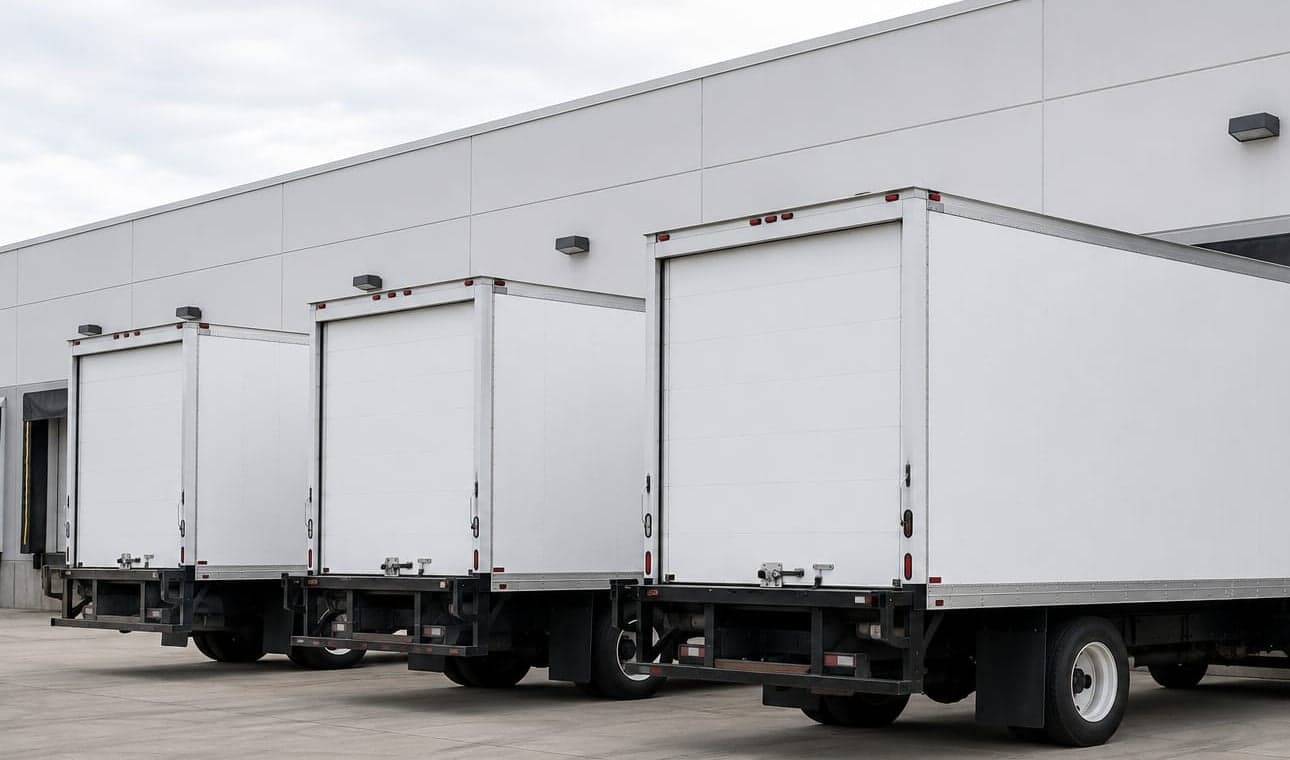
Applications
Aluminum coil for Truck & Trailer Panels
Truck & Trailer Panels uses wide body panels. Large flat panels in constant outdoor exposure; HDPE standard, PVDF for premium fleets.
Recommended starting specification
- Coil form
- Wide body panels
- Recommended coating
- PVDF, HDPE
Guidance, not a fixed datasheet: confirm per order.
Requirements
Trailer panels are some of the widest flat aluminum surfaces in regular production, and they carry the same oil-canning risk as wide roofing panels, on a structure that also flexes and vibrates constantly over the road.
- Flatness and gauge: have to account for vibration fatigue over the trailer's service life, not just static appearance. A panel that reads flat on a rack can still develop stress cracks or fastener fatigue after years of highway miles.
- Coating load: is more than sun. Road spray, stone chips, and frequent runs through fleet washes with commercial detergents all attack the coating faster than static weathering alone, so adhesion and chemical resistance matter as much as UV retention.
- HDPE vs. PVDF: HDPE is the standard choice for that combined load. PVDF earns its place on premium fleets where color retention on the livery matters as much as durability, since panels also carry printed or wrapped branding that needs a stable, flat substrate underneath.
- Long service life: fleets that keep trailers in service for many years feel coating shortfalls more than most applications, because a panel that chalks or fades unevenly stands out against a fleet livery in a way a single roof or wall never has to compete against.
How it's formed
Wide panels are typically roll-formed or brake-formed into flat or lightly ribbed profiles sized to the trailer's structural framing and rivet or bond-line spacing.
What comes with your order
Material certificates accompany every batch. Test reports and ASTM/EN references are available on request.
Frequently asked questions
- Why do trailer panels need tighter flatness than typical outdoor panels?
- Trailer panels run some of the widest flat spans in regular production, which already raises oil-canning risk, and they also flex and vibrate constantly on the road. Flatness and gauge have to account for both the visual risk and the fatigue risk from years of highway vibration, not just static appearance.
- When should a fleet choose PVDF over HDPE for trailer panels?
- HDPE is the standard coating and handles road exposure, washes, and general weathering well. PVDF is worth the upgrade for premium fleets where the livery's color and gloss retention matter as much as raw durability, since faded or chalked panels stand out against printed branding more than on an unbranded surface.
- Does fleet washing affect coating choice for trailer panels?
- Yes. Frequent runs through commercial washes with strong detergents add chemical exposure on top of normal weathering and road spray. That combined load is part of why HDPE, not a lighter PE coating, is the standard spec for trailer panels rather than treating them like short-exposure signage.
- How does panel width affect trailer panel specification?
- Wider panels amplify any flatness issue in the coil the same way wide roofing pans do, since there's more flat area to show waviness. Trailer panel width is set by the trailer's framing and rivet or bond-line spacing, and gauge needs to be matched to that width to control oil-canning.
- What's the biggest failure mode on trailer panels specified with the wrong coating?
- Panels that see full-time outdoor exposure and frequent washing with a coating rated for lighter duty chalk and lose adhesion faster than expected, sometimes showing coating lift at panel edges or rivet lines first. That shows up as a maintenance and appearance issue well before the panel itself is structurally at risk.