
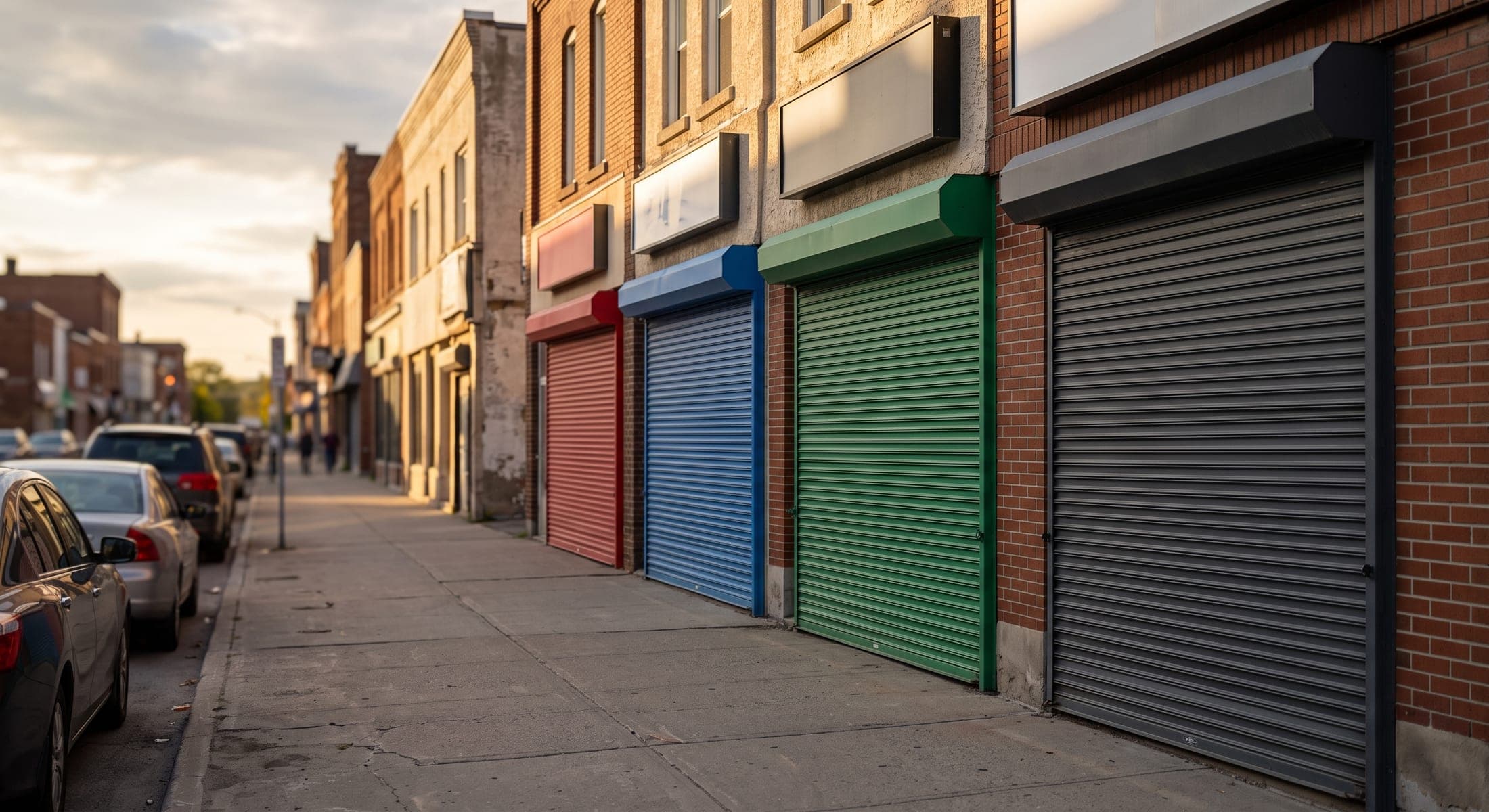
Applications
Aluminum coil for Rolling Shutters
Rolling Shutters uses roll-formed slats. High-cycle mechanical wear; PUPA's abrasion resistance is the standard answer, PVDF where coastal or UV exposure is also a factor.
Recommended starting specification
- Coil form
- Roll-formed slats
- Recommended coating
- PVDF, PUPA
Guidance, not a fixed datasheet: confirm per order.
Requirements
Rolling shutter slats interlock at a curled hook and cycle up and down dozens of times a day in commercial settings.
- Coating wear: the coating takes constant metal-on-metal abrasion at every hook and overlap, not just UV exposure, so a coating chosen for weatherability alone wears through at the contact points long before it fades.
- Bare-spot corrosion: once the film scuffs off at the hook, bare aluminum sits exposed exactly where two slats keep rubbing, and corrosion starts from that line.
Temper matters as much as coating.
- Ductility: the slat needs enough ductility to curl into the interlock hook during roll-forming without cracking the radius, but enough stiffness afterward to resist fatigue from the repeated cycling.
- Too soft: coil telescopes or deforms in the shutter box.
- Too hard: coil cracks at the hook during forming or springs back so the interlock won't seat cleanly.
Flatness and coil set carry through into the finished shutter too.
- Uneven coil set: a slat with uneven coil set bows once it's rolled, and a bowed slat binds in the guide rails, so the shutter jams or rolls unevenly.
- Misdiagnosed cause: that failure gets blamed on the installation, but it usually traces back to the feed coil.
Where the interlock hook takes the wear
Contact point
Coating wear at the hook
Every slat's curled hook overlaps the next slat's edge, so this contact point takes metal-on-metal abrasion on every open and close cycle, not just UV exposure. A coating chosen for weatherability alone wears through here long before it fades.
Bare-spot corrosion
Once the film scuffs off at the hook, bare aluminum sits exposed exactly where two slats keep rubbing, and corrosion starts from that line rather than from the flat face of the slat.
How it's formed
Slats are roll-formed on a continuous multi-stand mill that curls both edges into interlocking hooks in a single pass; temper is selected to let the strip take that hook radius without cracking or excessive springback.
What comes with your order
Material certificates accompany every batch. Test reports and ASTM/EN references are available on request.
Frequently asked questions
- Why does rolling shutter coil need PUPA or PVDF instead of a cheaper PE coating?
- Because shutters cycle daily, PE wears through at the slat interlock points from repeated metal-on-metal contact long before UV degrades it. PUPA is built for abrasion; PVDF adds UV and color stability where coastal exposure is also a factor.
- When do we specify PVDF over PUPA for shutters?
- PUPA is the standard answer for abrasion resistance on inland installations. Switch to PVDF when the shutter also sits in coastal or high-UV exposure, since PVDF holds color and resists salt-driven corrosion better long term, even though it isn't quite as abrasion-hard as PUPA.
- What temper works best for shutter slats?
- Temper is set to hold the curled hook profile without cracking during roll-forming while still resisting fatigue from daily cycling. Too soft, and the slat deforms or telescopes in the box; too hard, and it cracks at the hook radius during forming or won't interlock cleanly.
- How does flatness affect shutter performance?
- Coil set or camber that isn't controlled shows up as slat bow after roll-forming. A bowed slat binds against the guide rails, and the shutter jams or rolls unevenly. It reads as an installation problem on-site, but it's a feed-stock issue.
- How many open/close cycles does the coating need to hold up to?
- There's no universal number since usage varies by site, but commercial shutters can see several cycles a day, thousands over a service life. That's why abrasion resistance, not UV rating, is the deciding factor when picking between PUPA and PVDF.